

A data breach happens when sensitive information is accessed, exposed, or stolen without authorization.
If you’re reading about a data breach in the news or wondering if one affects you, you’re not alone. Data breaches are now a daily occurrence, impacting individuals, businesses, and governments worldwide.
This guide explains what a data breach actually is, why they keep happening, and what to do next.
What Is a Data Breach?
A data breach is a security incident where protected data is viewed, copied, or shared by someone who shouldn’t have access to it.
This data may include:
- Email addresses and passwords
- Personal identification details
- Financial or payment information
- Internal company documents
A breach doesn’t always involve elite hackers — many start with simple mistakes.
What Happens in a Data Breach?
In a typical breach:
- Data becomes exposed or accessible
- An unauthorized party accesses it
- Information is copied, leaked, or sold
- Victims are often notified after the fact
Once exposed, data can spread quickly and is nearly impossible to fully recover.
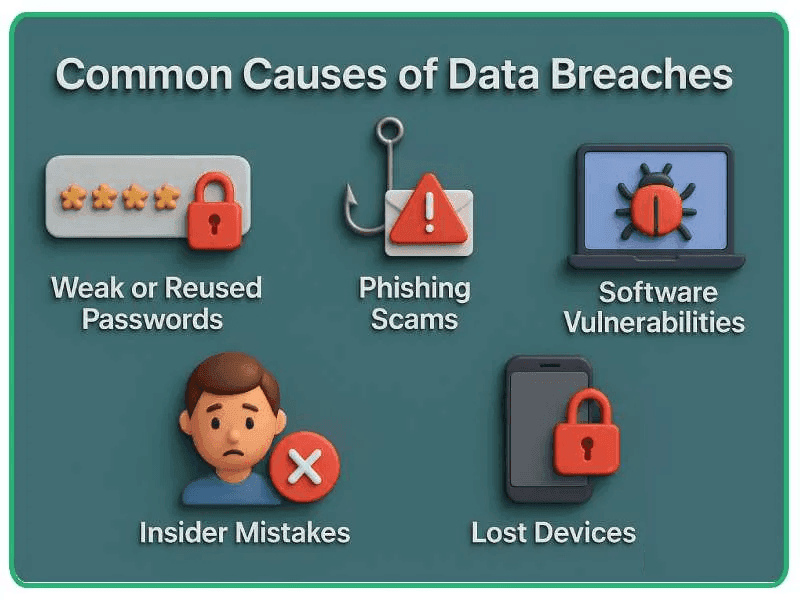
Common Causes of Data Breaches
Most breaches fall into a few predictable categories.
Hacking and Cyberattacks
External attacks remain a major cause.
- Phishing emails
- Malware infections
- Credential stuffing
Attackers often reuse leaked credentials from earlier breaches (check if your data has been leaked - it's free).
Human Error
One of the most overlooked causes.
- Sending data to the wrong person
- Weak or reused passwords
- Accidental public file sharing
Many large breaches begin with a single mistake.
System and Cloud Misconfigurations
Especially common in modern tech stacks.
- Public databases with no authentication
- Overly broad access permissions
- Unsecured APIs
These issues can expose millions of records instantly.
Types of Data Breaches
Not all data breaches look the same.
Common types include:
- Credential breaches – usernames and passwords leaked
- Financial breaches – payment or banking data exposed
- Personal data breaches – names, addresses, IDs
- Corporate breaches – internal or proprietary information
Each type carries different risks and long-term consequences.
Why Data Breach News Keeps Increasing
Data breach news is rising because:
- More data is stored online than ever before
- Attackers are more automated and persistent
- Companies rely heavily on third-party tools
- Many breaches go undetected for months
Visibility has improved — but prevention hasn’t always kept up.
What to Do After a Data Breach
If you’re affected by a breach:
- Change exposed passwords immediately
- Enable two-factor authentication
- Watch for suspicious account activity
- Be alert for phishing attempts
- Monitor your personal information
Early action can significantly reduce damage.
Frequently Asked Questions (People Also Ask)
What is considered a data breach?
Any unauthorized access, exposure, or theft of protected data.
Do data breaches only affect large companies?
No. Small businesses and individuals are frequent targets.
Is a data breach illegal?
The breach itself isn’t always illegal, but failing to protect data or disclose it often is.
Can you remove your data after a breach?
Once leaked, full removal is difficult, but monitoring and mitigation help.
Final Thoughts: Why Data Breaches Are Everyone’s Problem
A data breach isn’t just a company issue — it’s a personal risk.
Understanding how breaches happen, following data breach news, and taking basic security steps can dramatically reduce long-term harm.
Awareness is the first layer of protection.